
Employee onboarding using 1:1 Meeting templates and Objectives
Many companies approach an employee’s on-boarding by having new joiners participate in some form of 30-60-90 day review. This article outlines the best way to leverage the 1:1 Meeting notes and Objectives features to best facilitate these and avoid having to set up numerous Performance Review cycles with only one participant.
Table of Contents
Using 1:1 meeting templates
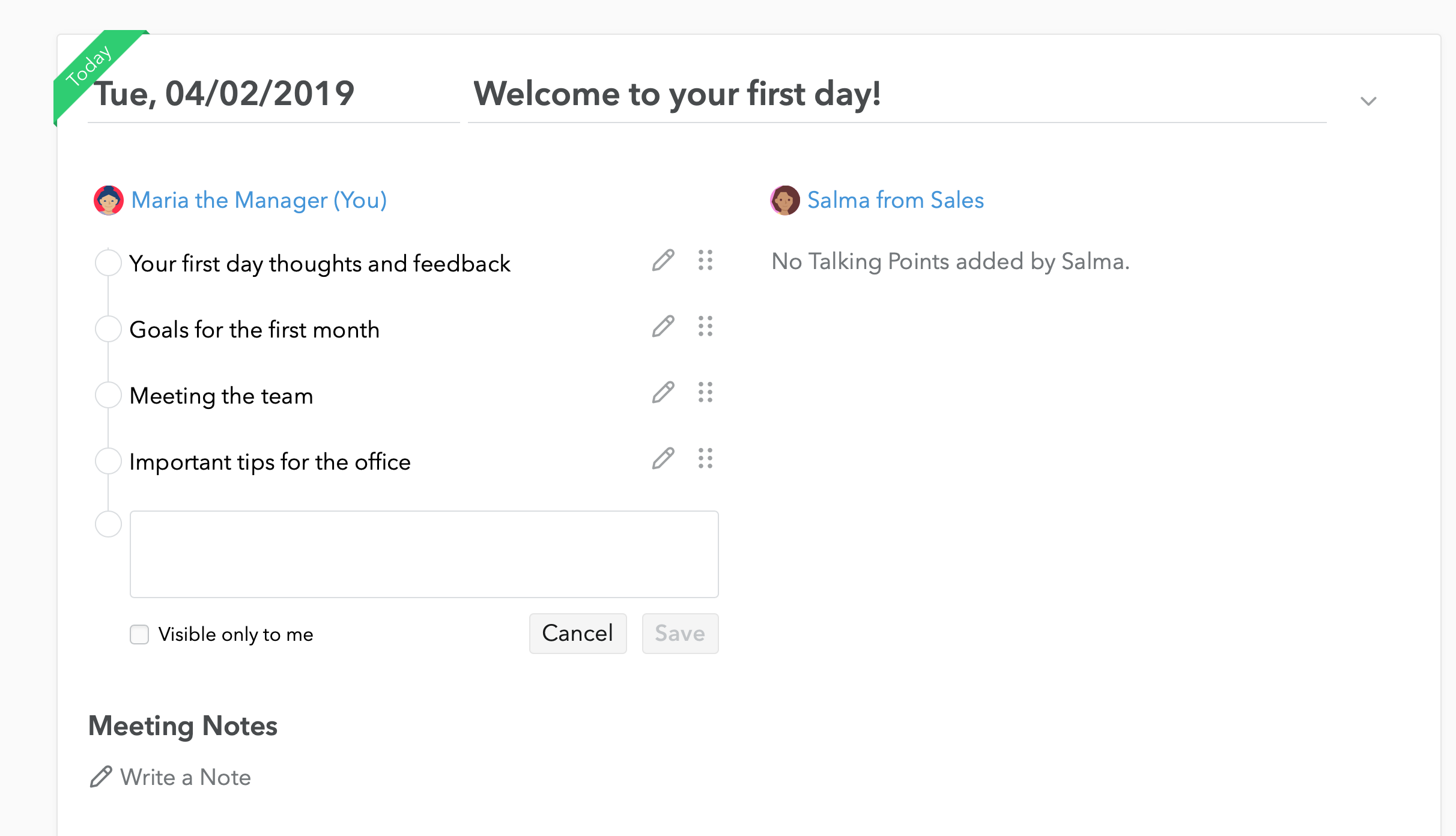
Managers find it helpful to have a set of expectations, or a workflow, to run through when on-boarding a new team member. Setting up a 1:1 Meeting template will help to support them doing this and doing it well. It will also save them a lot of time and ensures that your on-boarding process has consistency across teams.
- Consider including talking points to introduce them to their teammates, the projects that are currently being worked on, office protocols and schedules, best restrooms, anything that can help them get acclimated and feel as though they belong as quickly as possible.
- We have a inspiration for questions here: 24 questions to ask in your next 1:1 meeting
Below is an example template in action:
Creating Objectives
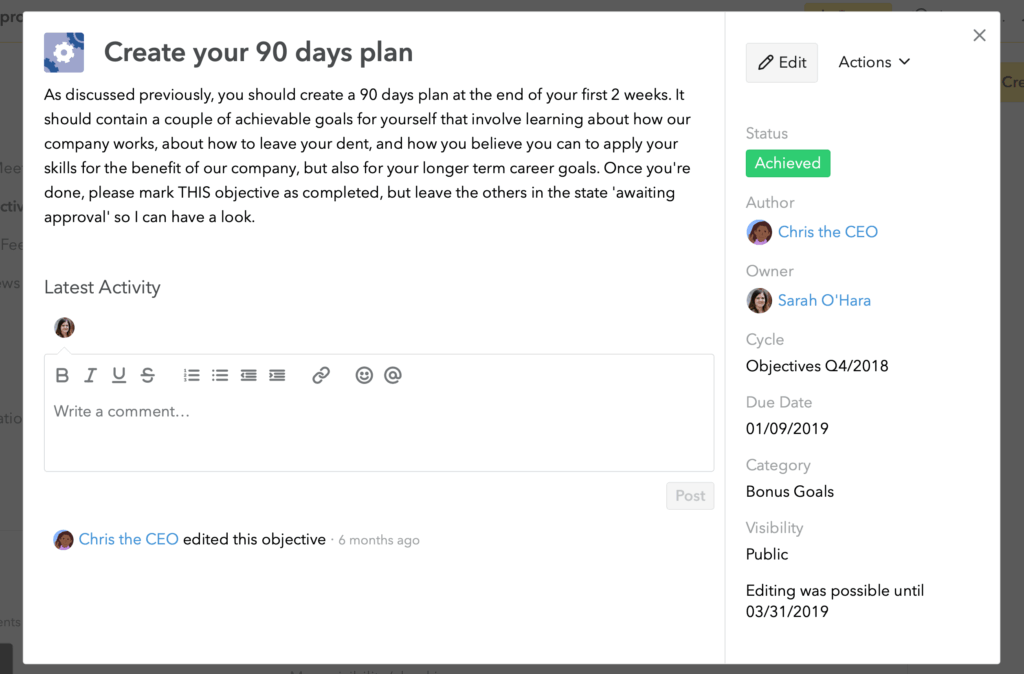
You might also consider adding that they two create an on-boarding objective that they both track progress of over their trial/introductory period. Include this step as a talking point in your on-boarding 1:1 Meeting note template to ensure that it sets a clear expectation.
-
Tracking progress of a goal you set together along the way is much more proactive as an approach to 90 day reviews because the objective clearly outlines what it will take to be successful in that on-boarding period.
Below is a first 90 day objective action plan example:
Benefits to Performance Management
The benefit to having an objective to track progress of is that there is now a container to keep a tally of ongoing feedback and accomplishments that can be reviewed at the end of the introductory period.
Reflecting within the first 90 days
At the end of the introductory period, you might have another 1:1 template for the two of them to complete that summarizes the experience and sets the foundation of the feedback relationship that they’ll have moving forward.
Talking points such as: what went well, areas for continued growth, aspirations for their employment there, etc.
To gain even further insights into the new employees on-boarding, have them solicit feedback from those they worked with by using our Request Feedback feature. To ensure this is consistent, why not create a template for them to utilize as part of the process. This can then be another talking point added to the 90 day reflection 1:1 Meeting template.
This on-boarding objective and the relevant on-boarding 1:1 Meeting notes will add a layer of extra feedback that will support the manager and employee during their first formal Performance Review and/or 360 later on in the year.
Discover more resources

Building an effective performance review questionnaire
Want to create more effective questionnaires for your next performance review? Here are some tips and tricks on how to structure your questionnaire, the types of questions to use, and more.

How to build the best internal mobility program
Is internal mobility the way to keep talented employees from leaving your company too soon?

Introducing a performance review system – the gentle way
If you want to redesign your performance review process but feel that selling the idea to your team might be difficult, you’ve come to the right place! Instigating change is tricky, and introducing a new performance management system can backfire if not done properly. Read on for some suggestions on how to get started and…

Struggling with retention? Try regular check-ins
There’s a simple way to improve employee retention and satisfaction in your org, and that’s having regular check-ins.

From 360 Feedback to Clear Objectives: Turning Insights into Action
Feedback is one of the most powerful tools for growth, but too often, it gets stuck in the past. Employees complete their 360s, read through the comments, and walk away with insights… but they do not have a clear plan for what comes next.

The 10 Best Performance Management Tools in 2025 (And How to Choose the Right One for Your Team)
Why companies are rethinking performance right now? Performance management has come a long way from the once-a-year review and vague development goals. Many teams are moving away from rigid processes and starting to ask a more useful question: how can we help employees grow while still hitting goals as a company?